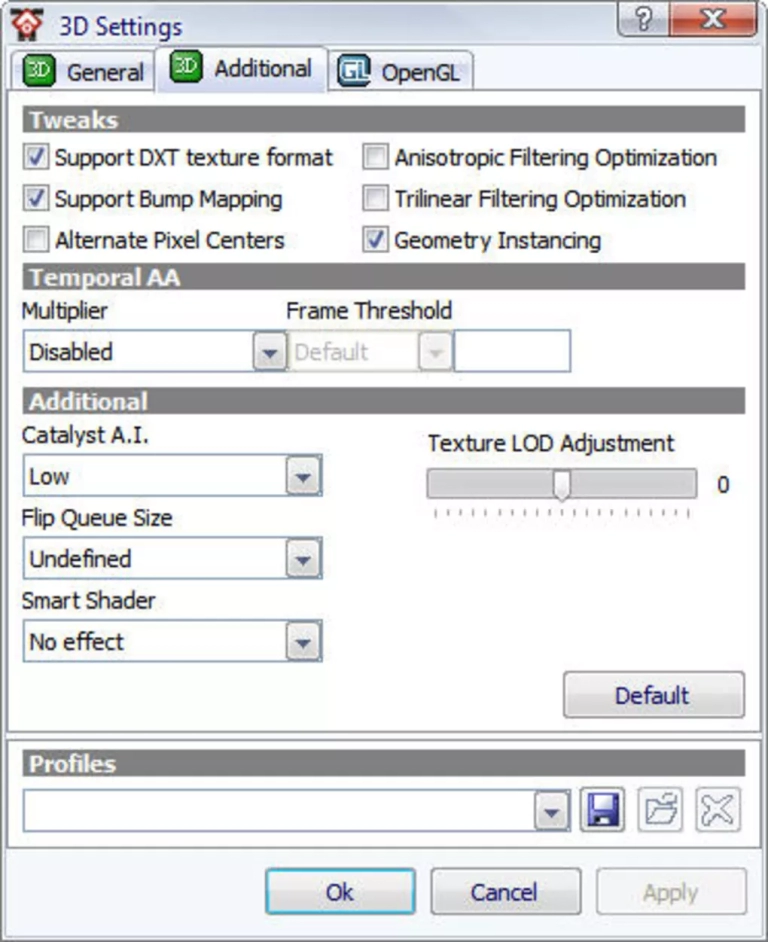
ATI Tray Tools is a free, open-source tray utility for Radeon graphics cards. I’ve used it on older machines; it gives quick control over GPU clocks, fan speed, and 3D settings from the system tray. People liked it for being simple and light on resources.
| ATI Tray Tools — Quick Facts | |
|---|---|
| Name | ATI Tray Tools |
| Author | Ray Adams (related to RivaTuner work) |
| Type | GPU tweaking & monitoring utility |
| License | Freeware / open source |
| Status | Discontinued — last known update around 2009 |
| Latest Version | 1.7.11.1584 (Beta) |
| Platform | Windows 2000 / XP / Vista / 7 |
| Best For | Older ATI/AMD cards (Radeon up to HD 4000 series) |
Here’s what it does (short): overclocking, fan control, monitoring, screenshots, on-screen display, and per-profile settings. I’ve noticed the UI is unusually straightforward. You can change core and memory clocks in real time, set fan curves, and see FPS while you play. Sounds basic? It’s enough for legacy rigs.
| Key Features | |
| Overclocking | Core & memory clock adjustments, voltage on supported cards, several profiles. |
| Monitoring | Temps, fan speed, GPU load, memory use, tray icon status. |
| Fan Control | Manual speeds, automatic curves, temp-based rules. |
| 3D & Display | AA, AF, VSync, gamma, profiles and hotkeys. |
| Extras | Screenshot tool, OSD FPS/temps, hotkey support. |
System requirements are tiny: Windows up to 7, ATI Catalyst drivers, roughly 512 MB RAM, and under 10 MB disk. That’s why old-school PCs ran it well. But there are caveats: it doesn’t support modern Windows 10/11 well, and it may fail on newer AMD GPUs (depends on your model).
Why use it? If you maintain a legacy machine or a retro gaming PC, it’s fast and direct. Why not? Because it’s unsupported and can be unstable with contemporary drivers; overclocking still risks damage. Honestly, I’d avoid using it on a daily driver.
Want modern alternatives? Try these in 2025:
- MSI Afterburner — widely used for overclocking and monitoring.
- AMD Radeon Software (2025) — official, modern feature set.
- GPU-Z — pure monitoring (no tuning).
“For vintage systems, ATI Tray Tools can be like a small, precise wrench: perfect for old bolts.” — personal take.
One controversial point: some users prefer community archives and third-party tweaks over AMD’s official software — I disagree sometimes, but many swear by them. Another debate: should you ever run unsupported tools on modern GPUs? Dangerous, and yes, some people do it anyway!
Practical tips (because why else read this): set a conservative fan curve, log temps during a 30-minute stress test, and keep a backup of any working profile. How do you hotkey a profile? Use the built-in profile switch hotkey. Example (very simple):
Profile 1 = 650MHz core / 800MHz memory
Hotkey = Ctrl+Alt+1
(This is just an example — adjust for your card.)
Safety note: ⚠️ overclocking can damage hardware. Always watch temperatures and have good cooling. There are exceptions where old cards behave better with older drivers, but that’s niche.
| Pros |
| Lightweight, single app for multiple tweaks, profile support, useful for vintage rigs. |
| Cons |
| Discontinued since ~2009; poor compatibility with modern drivers and Windows; no official support; risk if misused. |
Downloads are now only on archive sites. The original site (ray-adams.com) is offline. Community help exists but it’s mostly old forum threads. Oddly enough, keeping one of these tools around can be handy for certain hardware repairs — like finding a specific fuse that only shows up under old software. Surprising, right?
Final note: use ATI Tray Tools when you have an older Radeon and a spare machine. If you want long-term stability on a modern PC, pick up Afterburner or the official AMD software. Between us, don’t mix experimental overclocks with important work — you won’t like the outcome.
— I stumble a bit here, because vintage software has quirks. Still, the essentials are clear.
Emoji summary: ✅ small and capable for old cards. ⚠️ unsupported and risky on modern systems. useful for retro setups.