I use OverdriveNTool all the time for tweaking AMD cards. It gives precise control over clocks, memory, voltages and fans. I’ve noticed you can often get better sustained performance by undervolting than by brute-force overclocking. Want more FPS? You’ll have to test—there are exceptions.
Updated May 12, 2025. This write-up pulls practical details rather than puff. Honestly, some warnings are overblown; others are fair game. By the way, if you’re casual, this tool won’t feel friendly.
| OverdriveNTool — Practical Summary | |
|---|---|
| Name | OverdriveNTool (ODN Tool) |
| Developer | Unwinder (forum attribution on Guru3D) |
| Platform | Windows 10 / Windows 11 (64‑bit). Confirmed May 12, 2025. |
| Supported GPUs | AMD: Polaris → Vega → Navi → RDNA → RDNA2 → RDNA3 (RX 400 up through RX 7000 series) |
| Size / Install | Portable, ~1.2 MB, no installer required |
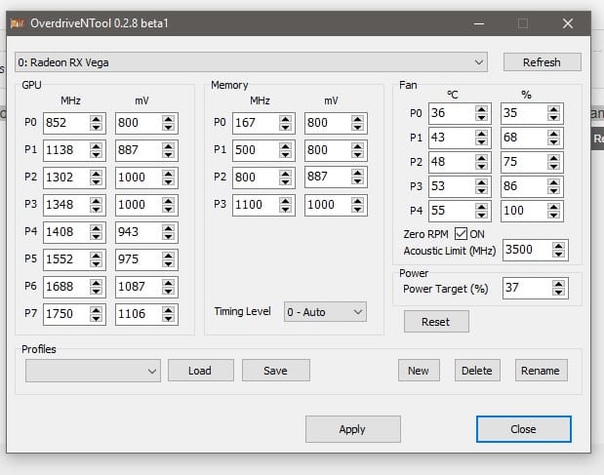
Here’s what you actually get: direct P‑state editing, memory timing tweaks, per‑state voltages, power limits, fan curves, profiles and command-line automation. I’ve used it for both gaming rigs and a small mining bench. Surprisingly, the same setting that helped one GPU tanked another—so test each card.
| Key Features & Notes | |
|---|---|
| Clock & Voltage Control | Per P‑state core clocks, memory clocks, core/mem volt adjustment (undervolt recommended) |
| Fan & Temps | Custom fan curves, zero‑RPM thresholds, temp limits |
| Profiles & Automation | Save/load many profiles, apply at startup, CLI support (useful for rigs) |
| Advanced | VRAM timing editor, registry tweaks, multi‑GPU management |
Watch this: undervolting can actually raise sustained clock stability because the card hits thermal/power limits less often. Counterintuitive? Yes. It won’t always work, depends on your silicon lottery and cooling. (There are exceptions.)
Tip: always save a default profile before you start. We found this shortcut saved hours of troubleshooting.
Quick comparisons. vs Adrenalin — deeper control, lighter footprint, steeper learning curve. vs MSI Afterburner — similar front-end, but ODN exposes memory straps that Afterburner doesn’t. Controversial bit: I think warranty concerns are sometimes exaggerated; manufacturers rarely track software‑level tweaks, yet they do reserve the right to deny warranty if hardware shows damage from misuse. So tread carefully!
| Advantages / Warnings | |
|---|---|
| Pros | Free, portable, low overhead, granular control, profile system, offline use |
| Cons | Steep learning curve, no official vendor support, possible instability or hardware stress if misused |
Safety basics — practical steps:
- Backup default settings first.
- Change one value at a time and stress test.
- Keep GPU temps ideally under 80°C; absolute short bursts can hit 85°C.
- Use FurMark or 3DMark for stability checks (and real workloads).
Typical ranges I use: core ±5–12%, memory ±5–18%, undervolt ~‑50 to ‑120 mV, power limit roughly ‑30% to +40% depending on card. These aren’t rules; they’re starting points.
Example: odntool.exe --apply-profile "gaming" --run-on-startupOne unexpected insight: for some RDNA cards, tighter memory timings improved hash rates more than raising frequency. Makes you think of GPU tuning like tuning a piano—small changes matter.
A short, blunt verdict: if you know what you’re doing, this is a top tool for AMD tuning. If you don’t, you’ll break things fast. Who is it for? Enthusiasts, miners, modders. Not for people who want a plug-and-play, warranty-safe route.
| Where to Get It | Notes |
|---|---|
| Guru3D forums (official threads), TechPowerUp | Manual checks for updates; no auto-updater. Last verified May 12, 2025. |
Questions? Try a small tweak first. Want my sample profile from a 6800 XT? Ping me—I’ll share the baseline (and yes, results will vary!).