
MorePowerTool (MPT) is a Windows utility that lets you change many AMD GPU parameters directly in the operating system registry instead of flashing a BIOS. I’ve used it on RX 6000 and RX 7000 cards; it gives fine-grained control over clocks, voltages, memory timings and power limits. Honestly, it can squeeze more efficiency or performance out of a card, but it can also make a mess if you rush.
Why use MPT? Because it edits SPPT/power tables in-place (no BIOS flash). That means you get access to locked parameters quickly. In my experience that speeds up experimenting. But—there are exceptions: some drivers will reset changes after updates and some vendors will refuse warranty claims.
| MorePowerTool — Quick Facts | |
|---|---|
| Program | MorePowerTool (MPT) |
| Developer | Community contributors and maintainers — not an official AMD product |
| Primary use | Modify AMD GPU power/voltage/clock/memory parameters via registry edits |
| Compatible GPUs | AMD Radeon RX 5000 series; RX 6000 series; RX 7000 series; limited Polaris/Vega support (check your card model) |
| OS | Windows 10 / Windows 11 (64-bit) |
| License | Freeware — community-distributed |
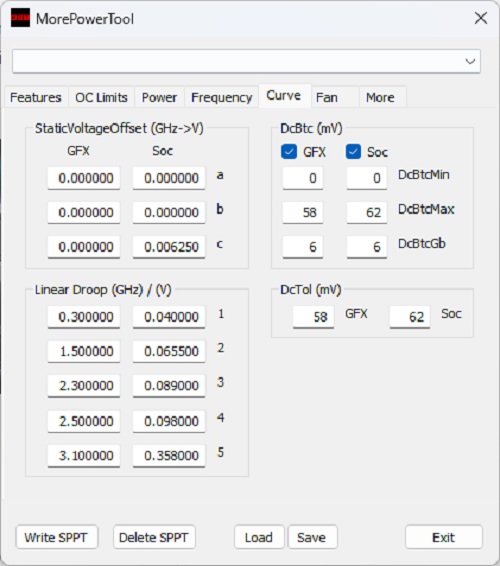
| Key features | Power limits (TGP/PPT/TDC), voltage curve edits, memory timing tuning, clock limits, fan and thermal limits, power table edits without BIOS flashing. |
| Risks | Void warranty, instability, possible hardware damage if misused, sometimes reset by driver updates. Requires admin rights and technical care. |
| Typical workflow | Launch as admin → load current SPPT → change parameters → write SPPT → restart driver/system → test stability (use monitoring tools). |
| Alternatives | MSI Afterburner, AMD Radeon Software, OverdriveNTool (older cards), Red BIOS Editor (BIOS flashing) |
| Community | Active Discords, Reddit threads, GitHub guides, YouTube tutorials |
Here’s the funny part: people expect instant, safe gains. That won’t work the way you expect if you skip testing. Do you know how to run stress tests? If not, stop and learn first.
“Back up registry profiles. Make small changes. Monitor temps.” — practical advice I repeat every time.
Short checklist:
- Back up current settings and save a stock profile.
- Change one parameter at a time and test stability.
- Keep logs of temperatures and frequencies.
Some controversial notes (yes, debate here): optimizing for cryptocurrency mining is profitable for a while but harms card resale value and increases electricity use — and some people consider promoting it unethical. Also, vendors sometimes refuse repairs after registry mods. I’ve seen both cases.
Specific, actionable tips and why they work:
- Undervolt the GPU core: reduces power draw while holding clocks, because silicon often runs stable at lower voltage.
- Tweak memory timings for mining: memory timing changes improve hash rates by lowering latency (depends on memory chips).
- Lower TGP for quiet systems: reducing power limit lowers temps which lets fans run slower, so noise drops.
Small code example to start MPT (run as admin):
cd "C:pathtoMorePowerTool"
MorePowerTool.exe
(Use Windows Explorer: right-click → Run as administrator.)
Important dates and status: checked 2025-11-20 — tool remains community-maintained and sees irregular updates tied to new GPU generations. Check the project page or community threads for the latest build.
Oddly enough, one counterintuitive insight: lowering a single voltage point can sometimes raise sustained clock speeds because thermal throttling drops less often. Try modest tests first!
To be fair, there are exceptions — some boards ignore certain entries, some driver versions break edits. Between us: patience pays. We found the best gains come from careful iteration, not wild shifts.
Final practical warnings:
- Always keep stock settings saved.
- Use stress tools (FurMark, 3DMark, memory testers) to confirm stability.
- If you depend on warranty, consider alternatives or check vendor policy.
Need a short, practical tweak template? Here’s one (copy-paste; edit values):
-- Template (example)
Set TGP = 180
Set GPU max clock = +50 MHz
Lower voltage curve by 25 mV
Adjust memory timings: fast level = 4
Apply → test 30 minutes → revert if unstable
Surprisingly, many users forget to test after driver updates. Don’t be that person. If you want, send your card model and driver version and I’ll point out the parameters to check (I’ll be blunt).